
How to Choose Your First Shibari Rope
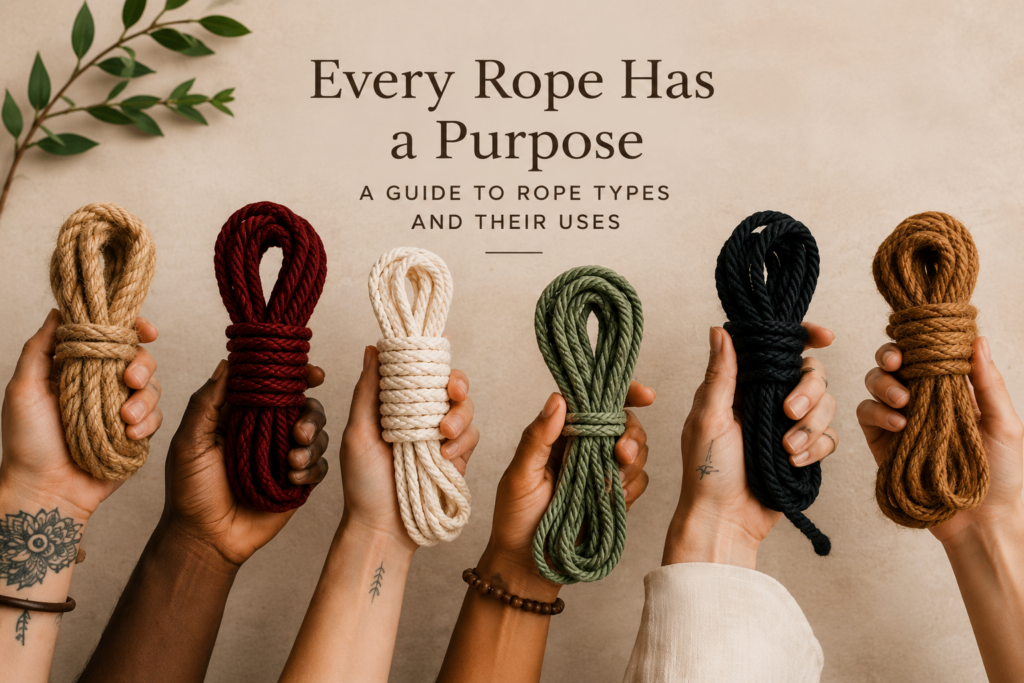
The First Rope Matters
For many practitioners, the first rope is more than a tool.
It is the beginning of a practice. A physical thread that connects learning, trust, creativity, and presence.
Yet newcomers are often faced with an overwhelming number of choices. Jute, hemp, cotton, synthetic… Different lengths, diameters, colors, and finishes!
The good news is that choosing your first rope is simpler than it appears.
Natural vs Synthetic Rope
The first decision is whether to use natural or synthetic rope.
Natural fiber ropes, particularly jute and hemp, have long been associated with Japanese rope traditions due to their texture, handling characteristics, and aesthetic qualities.
Synthetic ropes are generally more durable and easier to maintain, but they often lack the grip, feel, and responsiveness many practitioners seek.
For those interested in learning traditional-inspired Shibari, natural fiber rope is usually the preferred starting point.
When your play might include getting messy, consider synthetic ropes as they are much easier to wash and sanitize.
Why Jute Is So Popular
Jute remains one of the most widely used materials in modern rope practice.
It offers:
-
- Excellent grip
-
- Lightweight handling
-
- Strong knot retention
-
- Beautiful natural texture
-
- Traditional appearance
Well-prepared jute rope also develops character over time, becoming softer and more responsive with use.
This combination of practicality and aesthetic appeal is why many experienced practitioners continue to choose jute even after years of practice.
What Length Should Beginners Use?
A common beginner question is:
“How long should my rope be?”
The most versatile starting point is typically:
-
- 10 or 8 meter ropes
-
- 5-6 mm diameter
This size provides enough length for a wide variety of foundational ties while remaining manageable for learning.
As skills develop, practitioners often expand their collection with additional ropes to create more complex structures and patterns.
The Importance of Rope Preparation
Not all rope is ready to use immediately.
Traditional jute rope often requires preparation before it becomes comfortable and reliable for practice.
This may include:
-
- Singeing loose fibers
-
- Conditioning the rope
-
- Tension setting
-
- Light oil treatment
Proper preparation improves handling, reduces shedding, and extends the rope’s lifespan.
Quality Over Quantity
Many beginners focus on buying more rope.
A better approach is usually to begin with a smaller number of well-prepared ropes from a trusted source.
A carefully crafted rope will often provide a better learning experience than a larger collection of lower-quality alternatives.
Good rope becomes familiar in your hands. Over time, it develops a character of its own.
Final Thoughts
The ideal first rope is not necessarily the most expensive or the most traditional.
It is the rope that encourages practice.
Choose a natural fiber rope that feels comfortable, learn how to care for it, and allow your understanding to develop through experience.
Every practitioner begins with a single length of rope.
The ritual flows from there.